











































Together (2025) Movie Review – James McAvoy & Sharon Horgan Shine in Stephen Daldry’s Intimate Pandemic Drama
Rating: ⭐⭐⭐⭐ (4/5) Read the review of Together (2025), Stephen Daldry’s emotionally raw pandemic drama starring James McAvoy and Sharon Horgan. A powerful story of love, loss, and healing in lockdown.

A tender yet unflinching portrait of love, loss, and healing in a post-pandemic world.
Rating: ⭐⭐⭐⭐ (4/5)
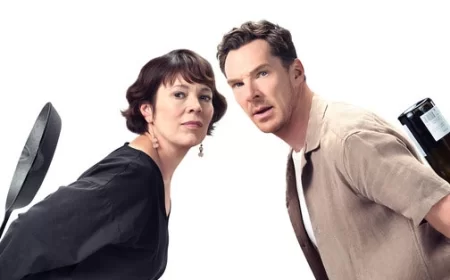
Together is a grounded, emotionally raw drama directed by Stephen Daldry, known for his work on The Hours and Billy Elliot. Starring James McAvoy and Sharon Horgan, the film explores the crumbling and rebuilding of a relationship during the COVID-19 lockdown. Originally released in select international markets in 2021, it received a re-release in 2025 with restored scenes and broader distribution due to renewed interest in pandemic-era stories.
At its core, Together is a character study — a film stripped of spectacle, relying entirely on performance, dialogue, and the messy humanity of two people forced to face each other with nowhere to run.
PLOT SYNOPSIS
Set almost entirely within the confines of a single home, Together follows an unnamed couple as they navigate the emotional turbulence of lockdown. With their relationship already on the brink, the pandemic forces them into close quarters, where old wounds resurface, resentment simmers, and unexpected tenderness begins to emerge.
The film unfolds in a series of vignettes — some confrontational, others heartbreakingly intimate — and through it all, the audience witnesses a couple confronting not just each other, but their past choices, shared grief, and uncertain future. It’s a dialogue-heavy film, but the writing is sharp, honest, and deeply affecting.
PERFORMANCES
James McAvoy delivers one of his most mature and controlled performances in years. As the emotionally volatile, often sarcastic partner, he balances charm with cruelty in a way that feels painfully real. His monologues are raw and unpredictable, swinging from humor to heartbreak within seconds.
Sharon Horgan is equally exceptional. Known more for her work in comedy, she brings a quiet intensity to the role, capturing the exhaustion and strength of a woman trying to hold both her family and her sanity together. Her stillness, particularly in moments of conflict, speaks volumes. Together, the pair share magnetic chemistry — equal parts combative and vulnerable — making even their silences feel charged.
Their performances elevate the film beyond its minimal setting, making the house feel like a war zone, a safe space, and a prison all at once.
DIRECTION & SCREENPLAY
Stephen Daldry’s direction is precise and intimate. He makes the bold choice to have the characters occasionally break the fourth wall, speaking directly to the audience — a technique that could feel gimmicky but works surprisingly well here. It creates immediacy and connection, giving viewers direct access to each character’s internal landscape.
Dennis Kelly’s screenplay is biting, poetic, and unfiltered. It captures the rhythm of real arguments, the pauses between thoughts, and the things people leave unsaid. There’s no traditional plot arc — the film leans into its theatrical roots — but the emotional evolution of the couple feels authentic and earned.
TECHNICAL MERITS
With most of the action confined to one location, the film’s success rests heavily on subtle craftsmanship. The cinematography is minimal yet effective, with tight frames and slow pans that heighten the sense of claustrophobia. Lighting is used sparingly to reflect mood — warm during fleeting moments of connection, cold and stark during emotional distance.
The sound design is naturalistic, keeping the audience grounded in the real-time domestic world of the couple. There’s almost no score, which works to the film’s advantage, letting the performances breathe without manipulation.
Editing is clean and purposeful, allowing the dialogue and timing to shine without unnecessary cuts.
AUDIENCE & CRITICAL RESPONSE
Together is not a traditional crowd-pleaser — it’s emotionally dense, dialogue-heavy, and unafraid to tackle grief, resentment, and political frustration head-on. Yet, for those willing to sit with its discomfort, it offers a cathartic, powerful experience.
Critics have praised the film’s realism and its refusal to offer easy resolutions. Performances by McAvoy and Horgan have been universally acclaimed, with many calling it some of their best work to date. The film has resonated especially strongly with viewers who experienced personal or relational upheaval during the pandemic.
Social media response has been more divided — some calling it “therapeutic,” others finding it too close to home. Still, the general consensus is that Together is a vital piece of pandemic-era storytelling that captures a unique moment in time with honesty and grace.
FINAL VERDICT
Together is a minimalist masterpiece — a two-hander that feels both intimate and universal. It’s not always an easy watch, but it’s a rewarding one, reminding us of the emotional cost of isolation, the difficulty of forgiveness, and the quiet strength of choosing to stay and fight for love.
Stephen Daldry crafts a space where pain, humor, and hope coexist, and his actors bring that space vividly to life. For those looking for spectacle, this isn’t your film. But for viewers craving raw human drama with exceptional performances, Together is one of the most emotionally resonant films of the year.
Rating: 4 / 5